
Read

Futures of science’ named
YOUNG female scientists from six continents were last night named “international rising talents” at the L’Oréal-UNESCO “For Women in Science” awards in Paris.
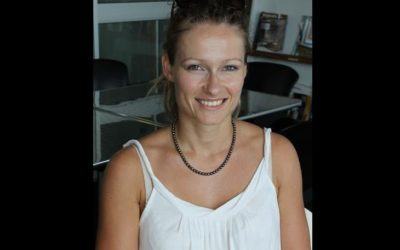
The awards are presented annually to 15 PhD students and postdoctoral fellows, selected from the winners of the 236 fellowships awarded by L’Oréal subsidiaries and UNESCO around the world. South African quantum biologist Adriana Marais is using quantum physics to explore the role of photosynthesis in the origins of life.
UKZN students make Mars One shortlist
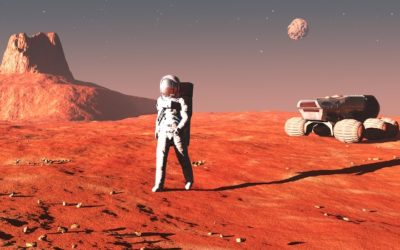
The last time man set foot on another planet was during the Apollo 17 moon landing in 1972! Now, thanks to the Mars One project, people could be walking on Mars in 2024 for the first time… and two UKZN students may be among them!
Ms Adriana Marais, a PhD candidate at UKZN’s Centre for Quantum Technology, and Mr Divashen Govender, a BSc student studying Applied Mathematics and Physics, have both made it into the Mars One final 100 as a result of personal online interviews with Dr Norbert Kraft, the Chief Medical Officer of the mission.
5 South Africans through to round 3 of kamikaze Mars mission
Cape Town – Adriana Marais from KwaZulu-Natal, Divashen Govender from Durban, Kobus Vermeulen from Pretoria (pictured below) and two other candidates, only known as Edwin and Alexandra, are the five South Africans who are still in the running to go on a kamikaze-type mission to Planet Mars in 2024.
Meet the South Africans who hope to go to Mars
Five South Africans have made it on to the shortlist of 100 candidates being considered for the Mars One space programme. Initially, more than 200 500 people applied to be trained as astronauts to stay on Mars. Mars One aims to establish a permanent human settlement on the Red Planet. Funding for the project has come from crowd-sourcing, merchandise sales and TV rights.
Four South Africans make round three of Mars One mission
The objective of Dutch non-profit Mars One is simple: to establish a permanent human settlement on the red planet. Mars One will begin training candidates for space travel up until its 2024 planned launch, when – if all goes well – teams of successful candidates from around the world will form part of the first human colony on Mars. Adriana Marais, a masters student at the University of KwaZulu-Natal, who the Mail & Guardianfirst spoke to when she made it through round one, and is now one of the final four South Africans, said: “What the first colonisers will do on Mars is really the pinnacle of four billion years of evolution.”
‘Over the moon’ about Mars trip
From more than 200 000 applicants across the world, Durban’s Adriana Marais is one of 100 potential astronauts shortlisted for a one-way expedition to Mars.
On Monday morning it was officially announced by the Mars One team that the 31-year-old quantum biology researcher was through to the third round of the application process, which could see her become one of 24 pioneers on Mars.

3 Durban Stars training for Mars One
University of KwaZulu-Natal student Divashen Govender, Adriana Marais and Michael Grundling are ecstatic at the prospect of possibly living on the red planet of Mars – even though they may never return . The three are among the 705 people short-listed from more than 200 000 applicants worldwide.

Is life at its heart a quantum problem?
Credit: Originally published by the Mail & Guardian. In the beginning, during the first billion years (Gyr) of the Earth’s 4.5Gyr life, space debris bombarded the planet. High-energy collisions with meteorites up to 500km in diameter frequently disintegrated newly...

Bye, bye Earth, hello Mars
She lies in bed daydreaming of the red planet, a place that has long inspired a deep curiosity as the only planet in our solar system to have a surface visible from Earth by telescope. A place where colonisation is no longer just a futuristic notion. Since early childhood Adriana Marais knew that if she was offered the opportunity to go into space, knowing she wouldn’t come back, she would never say no.

The South Africans hitching a one-way ticket to Mars
The Mars One programme is offering civilians, including South Africans, the opportunity to create a human colony on Mars. Is this a revival of the golden age of discovery, when explorers left their homes to begin new civilisations? Or is it a “suicide mission” in which people die in space while we watch from Earth, more than 200 million kilometres away?
It is the next frontier of exploration: space travel and colonising new planets. Six hundred years ago, explorers took to the high seas, forsaking land for months, on journeys from which they may have never returned. They went in search of exotic, “undiscovered” lands. In 2014, space travel is the new frontier, filled with the unknown and the taste of adventure.